
Survivors' Experiences as Hidden Children
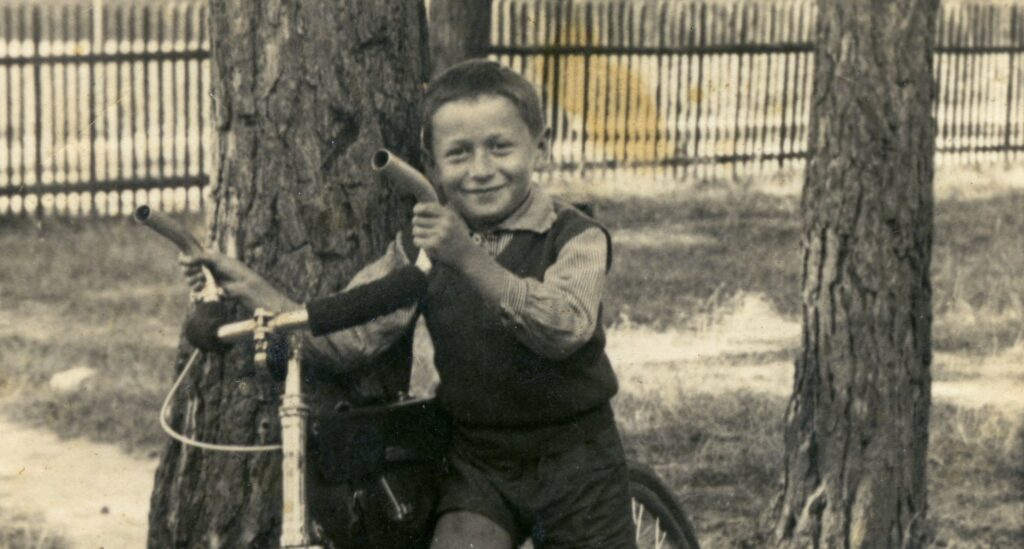
Among Neighbors illuminates the experience of Yaacov, a Jewish boy who spent part of the Holocaust in hiding in Poland. His story is both unique and part of the larger history of children persecuted during the Holocaust.
This guide provides context for understanding the experiences of hidden children across Nazi-occupied Europe and includes survivor testimonies that highlight both shared patterns and individual memories.
Hidden Children During the Holocaust
An Agonizing Choice
Survival in hiding often began with an unthinkable decision. Parents had to choose whether to give up their child, knowing it might be the only chance for survival. Factors such as age, gender, geographic location, and family resources shaped the possibilities.
Kristine Keren details her father’s choice to make preparations from a Polish Ghetto.
Finding Shelter
Once the decision was made, adults had to find someone willing to take in a Jewish child—an individual, a family, or an institution such as a convent or monastery. Babies and girls were often easier to place. Jewish boys were at greater risk of being identified because of circumcision, and many families viewed girls, especially younger ones, as “easier” to raise.
Vladka Meed stayed with Jewish orphans as they were sent from the Warsaw Ghetto to the Treblinka death camp.
Motivations
The reasons hosts agreed to shelter children varied. Some were motivated by compassion and a desire to save a life. Others, perhaps childless, welcomed the chance to expand their families. Still others required financial arrangements. In many cases, motivations were a combination of these factors.
Marion Pritchard, a member of the Dutch resistance movement, recounts her experience hiding a Jewish family.
Hiding
Children experienced hiding in very different ways. Some lived openly with non-Jewish families under assumed identities, posing as distant relatives, foster children, or even biological children if they were infants. They might attend school and appear to live “normal” lives, although they had to conceal their Jewish identity and practice the religion of their new “family.” Others were hidden in cellars, attics, or behind false walls, unable to go outside and living in constant danger of being discovered. Some endured abuse, and many were moved from place to place throughout the war. Almost all were separated from parents and siblings, often with no idea if they would ever reunite.
Clara Boren describes the experience of hiding in Poland during the war.
Aftermath
The effects of these experiences were profound and lasting. Some hidden children were reunited with surviving family, while others resisted returning to parents they no longer remembered, having bonded with their host families. Many struggled to reconcile the Christianity they had been forced to adopt with their postwar Jewish identity. For decades, hidden children were not recognized as Holocaust survivors. Since the 1990s, however, they have been acknowledged as Child Survivors, and many now share their stories with students to deepen understanding of survival, loss, and resilience.
Roman Kent talks about how his pet taught him that love is stronger than hate.
In your classroom:
Share the above background of hidden children and accompanying testimonies with your class and use the following questions to guide your discussion.
Discussion Questions:
- What factors influenced whether a Jewish child could survive in hiding during the Holocaust? Why do you think these factors were important?
- How do you think it felt for children to live with non-Jewish families, sometimes openly and sometimes in secret, while hiding their identity?
- Why might some children have had trouble returning to their biological families after the war?
- How do you think the motivations of the adults who hid children affected the children’s experiences?
- Why is it important to hear the stories of hidden children, and what can they teach us about courage and survival?
Incorporate these testimonies:
Hans A.
Paul S.
Jacob H.
Explore this classroom lesson:
Rescue & Resistance: Hidden Children During the Holocaust