
Prosperity, Persecution, and Perseverance
The Landauer-Kay Family Story
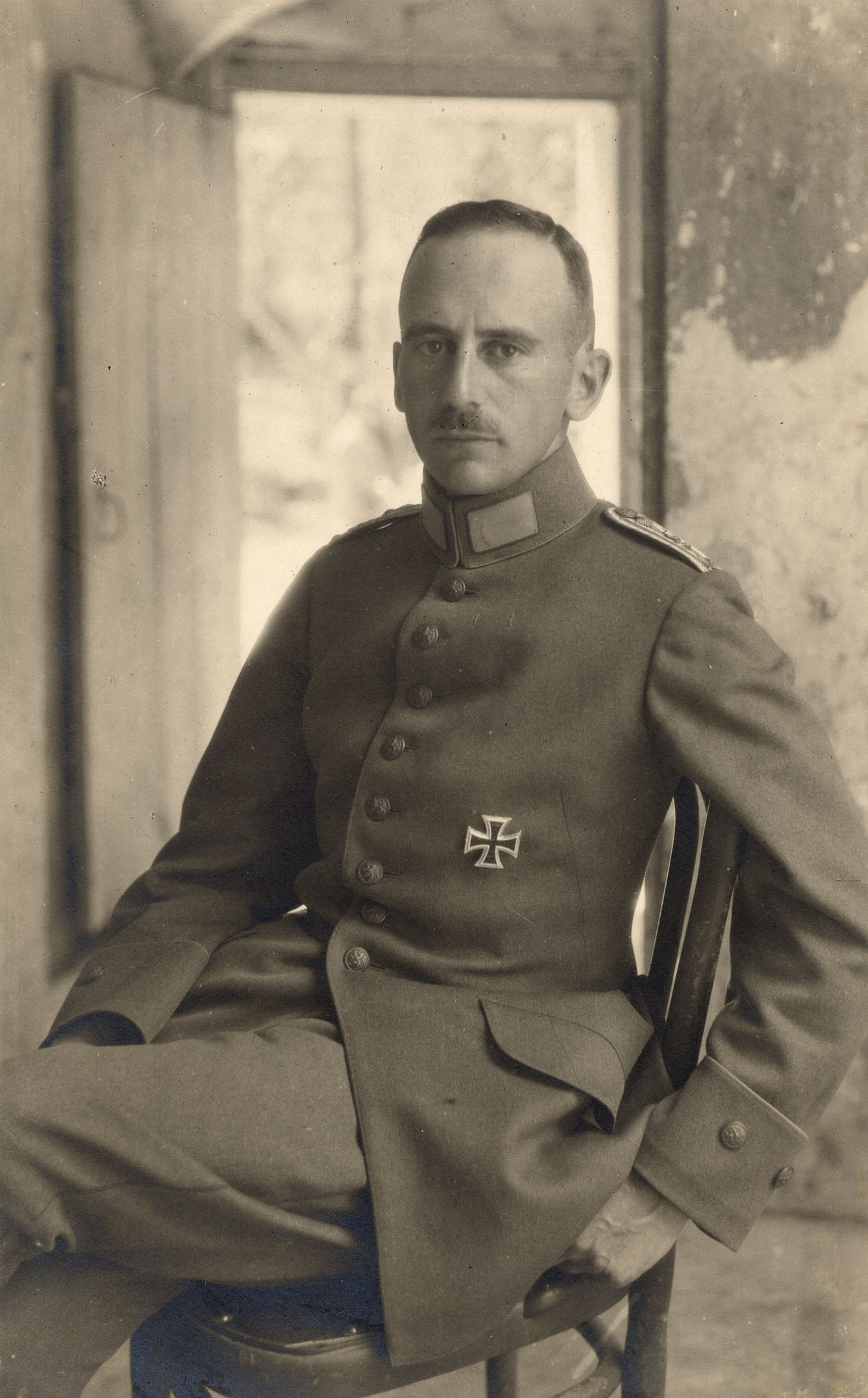
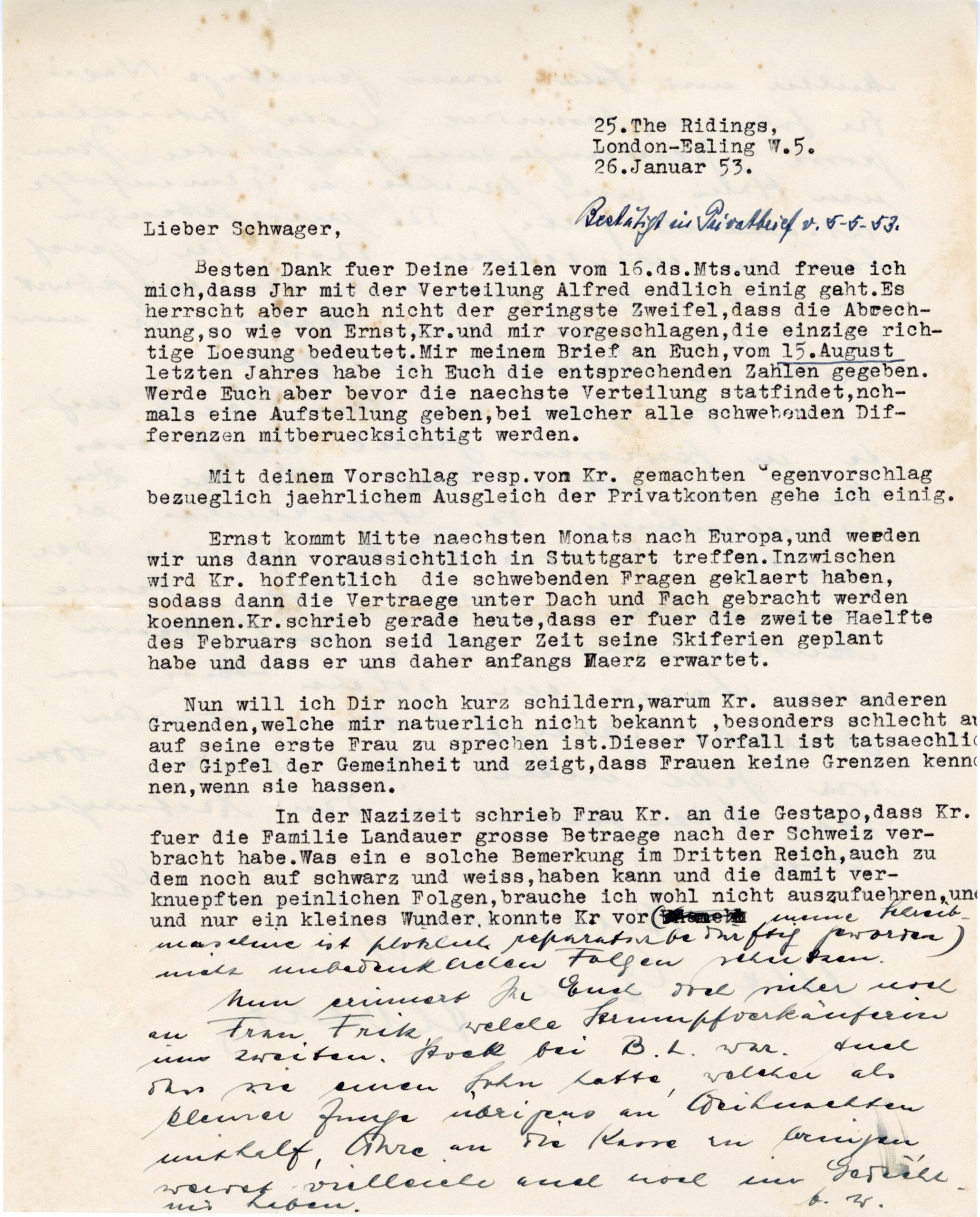
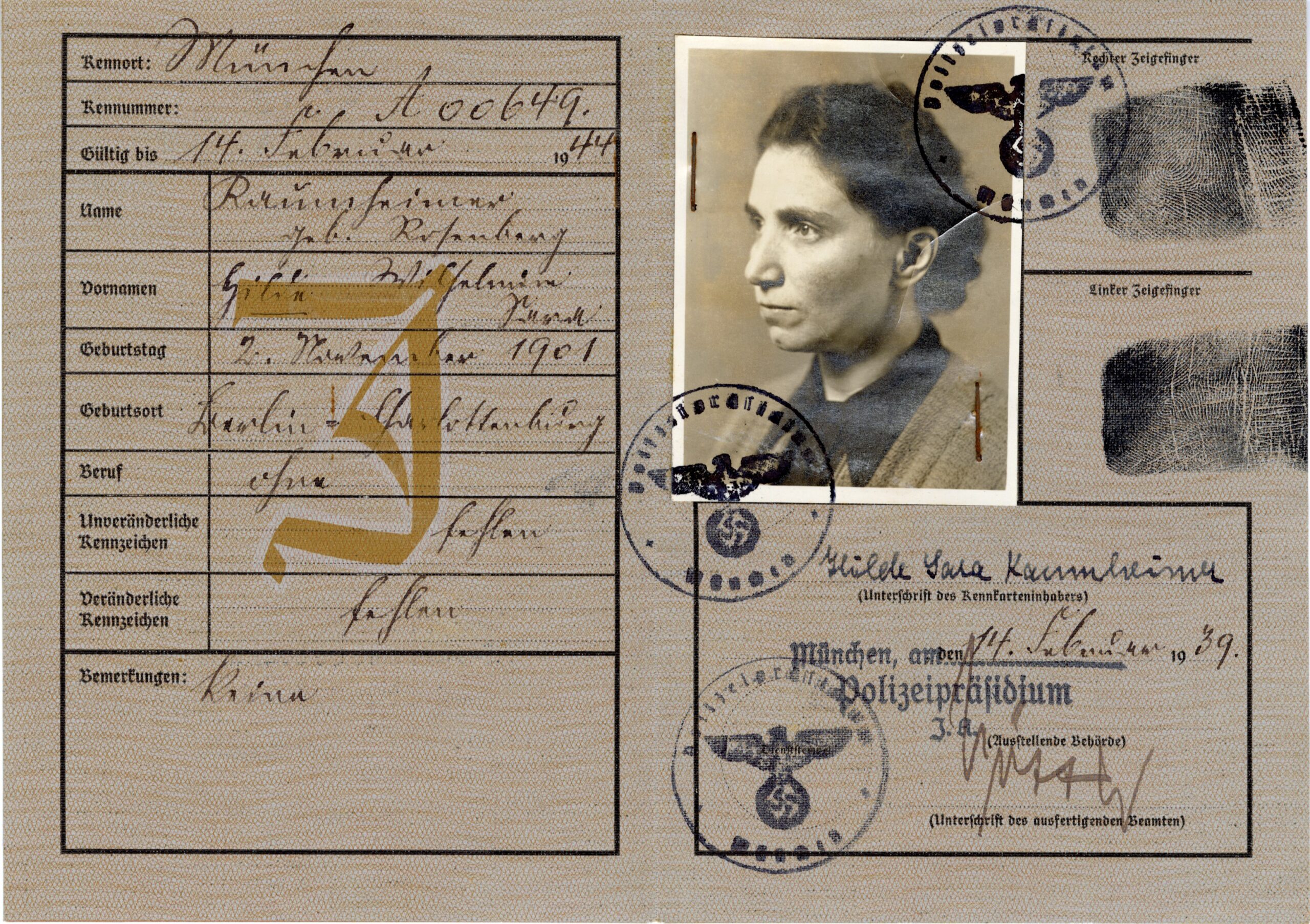
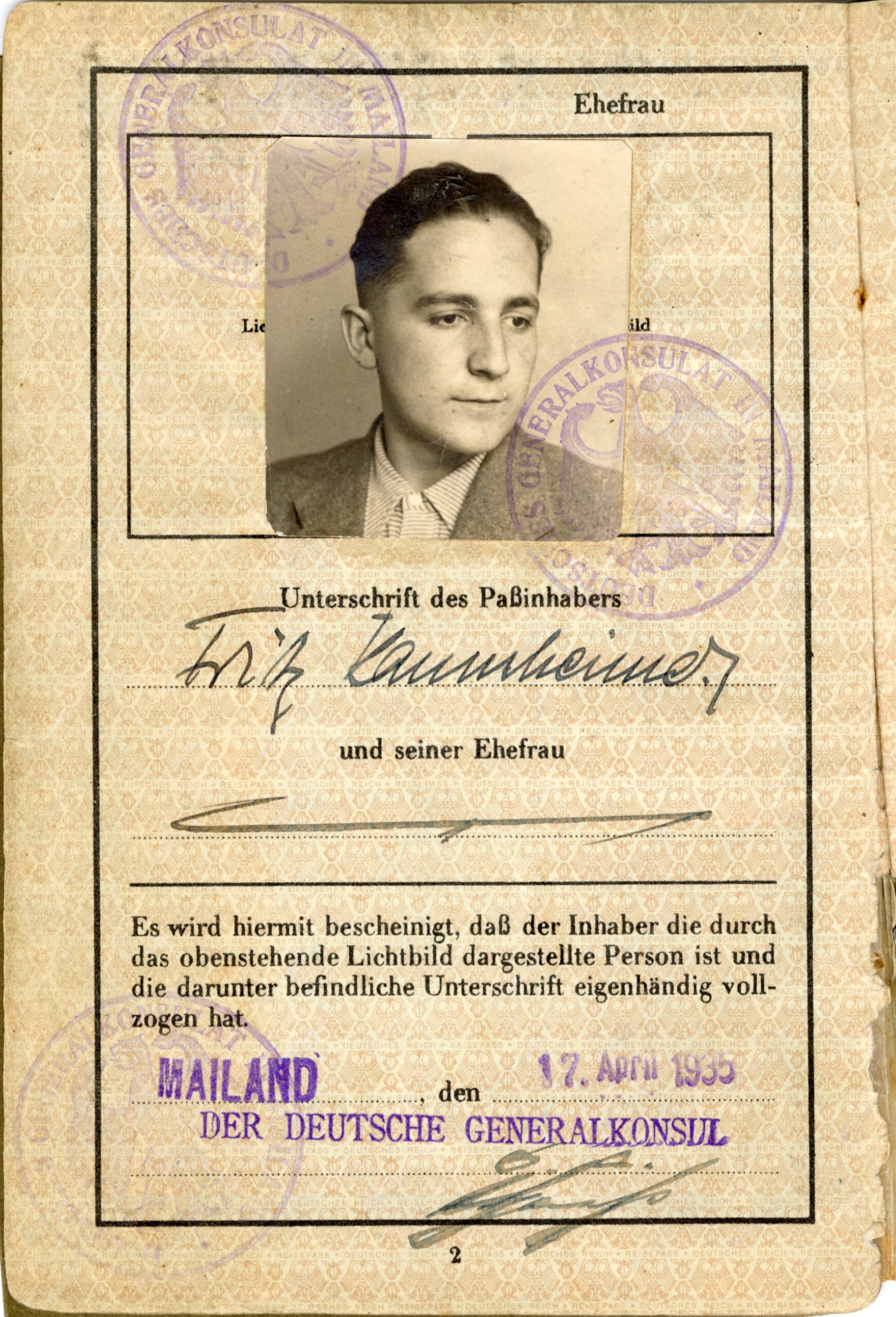
The Landauer and Kaumheimer families were two German Jewish families, linked by marriage, who rose to prominence during the 20th century. Starting in 1906, the Landauers founded a chain of successful department stores throughout Germany, the “Brüder Landauer,” which was ultimately “Aryanized” by the Nazi regime in 1934. Their investments in these businesses led to the acquisition of significant wealth and resources.
The Landauer-Kaumheimers fled Germany but were forced by the Nazi government to pay exorbitant sums of money due to discriminatory Jewish taxes. Four Landauer-Kaumheimer siblings, Albert, Julius, Selma, and Friedl, variously fled Nazi Germany to London, Buenos Aires, and San Francisco, where the Kaumheimers anglicized their surname to “Kay.” After World War II ended in 1945, they initiated restitution proceedings to regain the money and property that the Nazis stole from them.
This exhibit traces one family’s journey to reclaim their history, told through items from the Tauber archives.
The Landauer Department Stores
The history of the Landauer department stores begins with Abraham Landauer (1828-1907) and his wife, Flora Adler (1831-1894). Abraham was a merchant from the town of Münsingen who passed his trade on to four of his sons: Hugo, Louis, Emil, and Karl. The sons founded a textile and dry goods business by the mid-1880s, which they named “Brüder Landauer,” or “Landauer Brothers.”
Louis Landauer, at center-right with a white moustache and a top hat, celebrating his 70th birthday with his family in 1928. Courtesy of buttenhausen.wordpress.com.
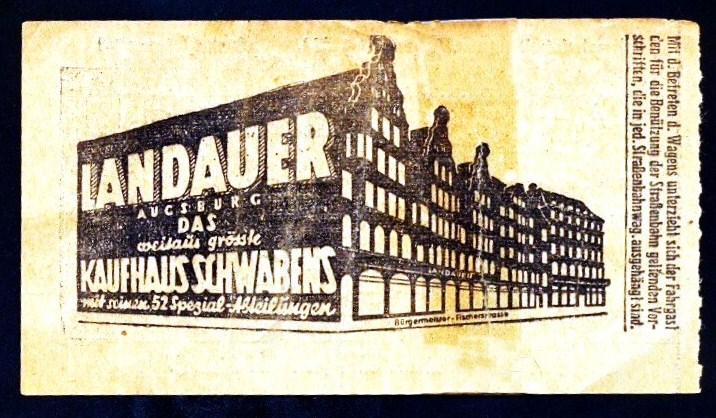
In 1906, Hugo expanded the family business to the Bavarian city of Augsburg, where he founded its first department store. His brother Louis took over the Augsburg store the following year, transforming it into an American-style shopping emporium. The store had four floors devoted to retail, elevators, a refreshment room, and a movie theater, just to name a few of its amenities. The Augsburg store was tremendously successful; a 1920s advertisement boasted that it was “the biggest Swabian department store by far, with its 52 special departments.”
Swabia
Swabia is a region in southwestern Germany in which the city of Augsburg is located. In addition to describing people, places, or things from Swabia, the adjective “Swabian” carries a strong connotation of frugality and “cheapness” in German culture. Therefore, the Landauer Augsburg advertisement above likely carries a double-meaning: the Augsburg store is not only the largest department store in Swabia, but customers will be able to purchase quality goods at cheap, “Swabian” prices.
The “Brüder Landauer” department stores continued to spread across Germany during the early 20th century. In addition to its largest store in Augsburg and its corporate headquarters in Stuttgart, new locations were founded in Berlin, Mannheim, Cologne, Heilbronn, Reutlingen, Worms, and Frankfurt.
Just as the Landauer business expanded, so did the family itself.
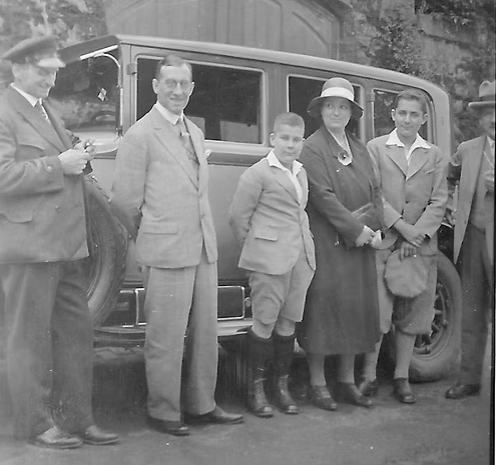
Louis and his wife, Cilli Levigard, had four children: Julius, Albert, Selma, and Friedl. Julius and Albert took over the business from their father by 1922. Unsurprisingly, as the department stores increased in number and popularity, the family became wealthy. Selma and her husband, Julius Kaumheimer, moved into a luxurious home in Stuttgart, complete with a nanny, chauffer, and boxing coach.
From right to left: Ludwig, Fritz, Selma, Hans, and Julius Kaumheimer stand in front of their car and Stuttgart home prior to 1936. Courtesy of the Ritchie Museum.
Nazi Germany: Discrimination, Aryanization, and Emigration
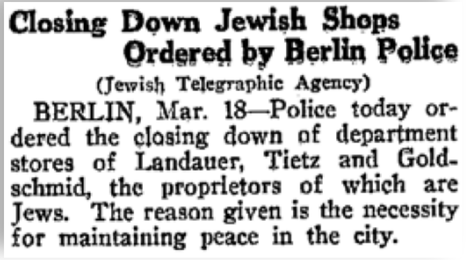
Adolf Hitler’s appointment as Chancellor of Germany in 1933 put an abrupt end to the Landauer-Kaumheimer family’s prosperity. On March 18, 1933, the Berlin police ordered the closure of the city’s Landauer department store, claiming that the closure was necessary for “maintaining peace.”
On April 1, 1933, the Nazi regime called for a nationwide boycott of Jewish-owned businesses, and the Landauer department stores were prominently targeted. The Nazis posted SS and SA guards outside of the stores who held banners that dissuaded non-Jews from shopping inside. One such banner outside of the Heilbronn store read, “Avoid the Jews, buy from Germans.”
SA and SS troops hold a banner outside of the Landauer department store in Heilbronn, Germany, during the nationwide anti-Jewish boycott on April 1, 1933. Courtesy of Stadtarchiv Heilbronn.
Although many non-Jewish Germans remained loyal customers, the Landauer-Kaumheimers eventually yielded to the Nazi regime’s increasing pressure on the family business. In 1934, Julius Landauer sold the Augsburg store to Albert Golisch, a non-Jewish businessman, as part of the government’s “Aryanization” policy.
Aryanization
Aryanization was a Nazi policy that forced German Jewish business owners to sell their businesses to non-Jewish buyers at prices that were a fraction of their actual value. Aryanization was designed to deprive German Jews of their businesses, limit their participation in economic life, and enrich non-Jewish Germans.
With their family business destroyed due to Nazi persecution, the Landauer-Kaumheimers prepared to flee Germany. However, the Third Reich had a robust system of laws and bureaucracy which were designed to rob German Jewish families of their money and property before, during, and after they left the country.
The Price of Escape
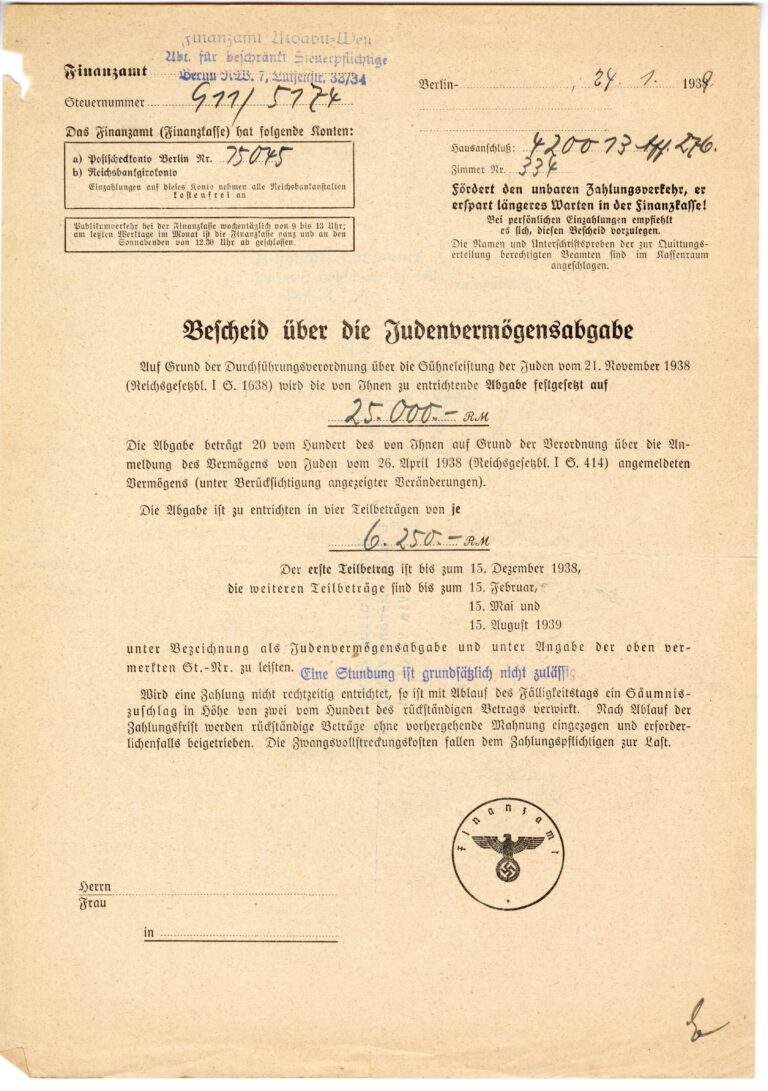
The Nazi government extracted wealth from the Landauer-Kaumheimer family through the Judenvermögensabgabe (Jewish Wealth Tax, 1.5 million RM); the Reichsfluchtsteuer, or “Reich Flight Tax” (an estimated 400,000 RM for permission to emigrate); and predatory currency conversion rates that undervalued Jewish-held assets—when Julius Kaumheimer transferred 900,000 RM from Germany to Switzerland in 1935, the exchange rate alone cost the family 675,626 RM. In total, the Nazis stole more than $24.6 million from the family in today’s money.
Pictured: an October 24, 1939, letter from Nazi authorities ordering Julius Kaumheimer to pay 25,000 RM—$238,000 today—under the Jewish Wealth Tax. JFCS Holocaust Center Archives.
Paths to Safety: The Landauer-Kaumheimer Family’s Global Emigration (1935-1940)
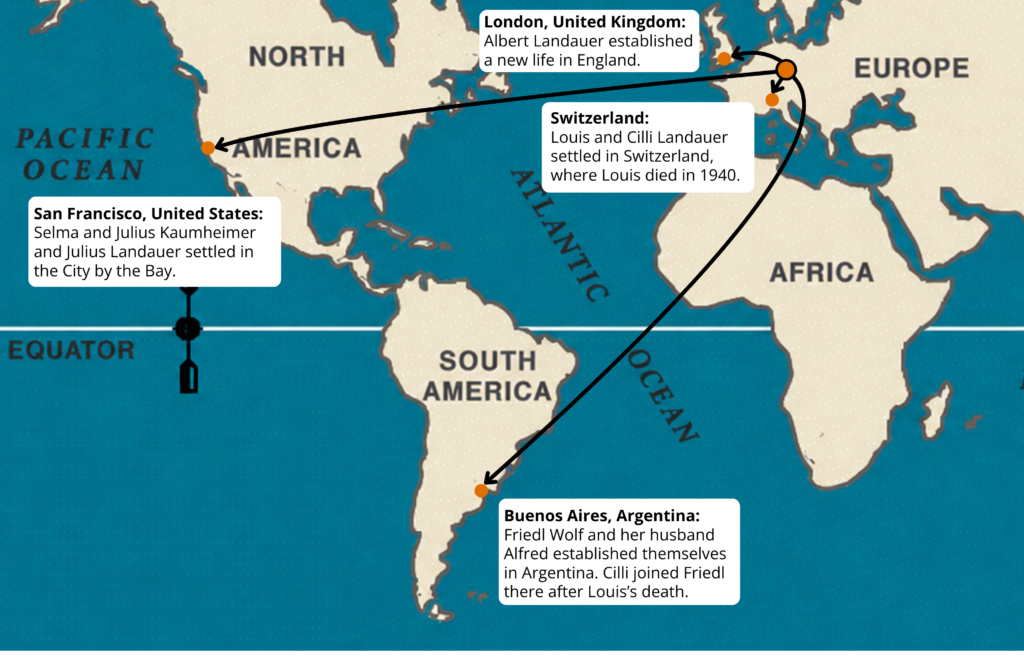
Between 1935 and 1940, Louis and Cilli Landauer and their four children fled Germany: Louis and Cilli settled in Switzerland, where Louis died in 1940; Albert immigrated to London; Friedl settled in Buenos Aires, where Cilli later joined her; and Julius, Selma, and her husband settled in San Francisco, where the Kaumheimers anglicized their family name to “Kay.”
The Long Road to Restitution
Despite leaving Germany, the Landauer-Kays never forgot the injustices that the Nazi regime inflicted on them. After World War II ended in 1945, the family began a decades-long process to regain their stolen wealth and property. Undertaking this process would not be easy. The war left Germany in ruins, with many of the Landauer-Kay family’s properties being damaged or destroyed. Moreover, the family had to navigate a dizzying legal and bureaucratic landscape at the local, state, and federal levels if they wanted a chance at restitution. Lastly, in 1949, the country became officially divided into a capitalist West Germany and a communist East Germany, which further complicated matters.
Restitution
Restitution refers to the legal and financial processes by which Jewish victims of Nazi Germany sought justice for the crimes committed against them. Restitution could take many forms, such as financial compensation for stolen wealth or property, the recovery of art or other physical assets, and trying Nazi perpetrators for the murder of one’s family or friends. The Landauer-Kay family’s story is one example of how Jews tried to hold Nazi Germany accountable after the Holocaust.
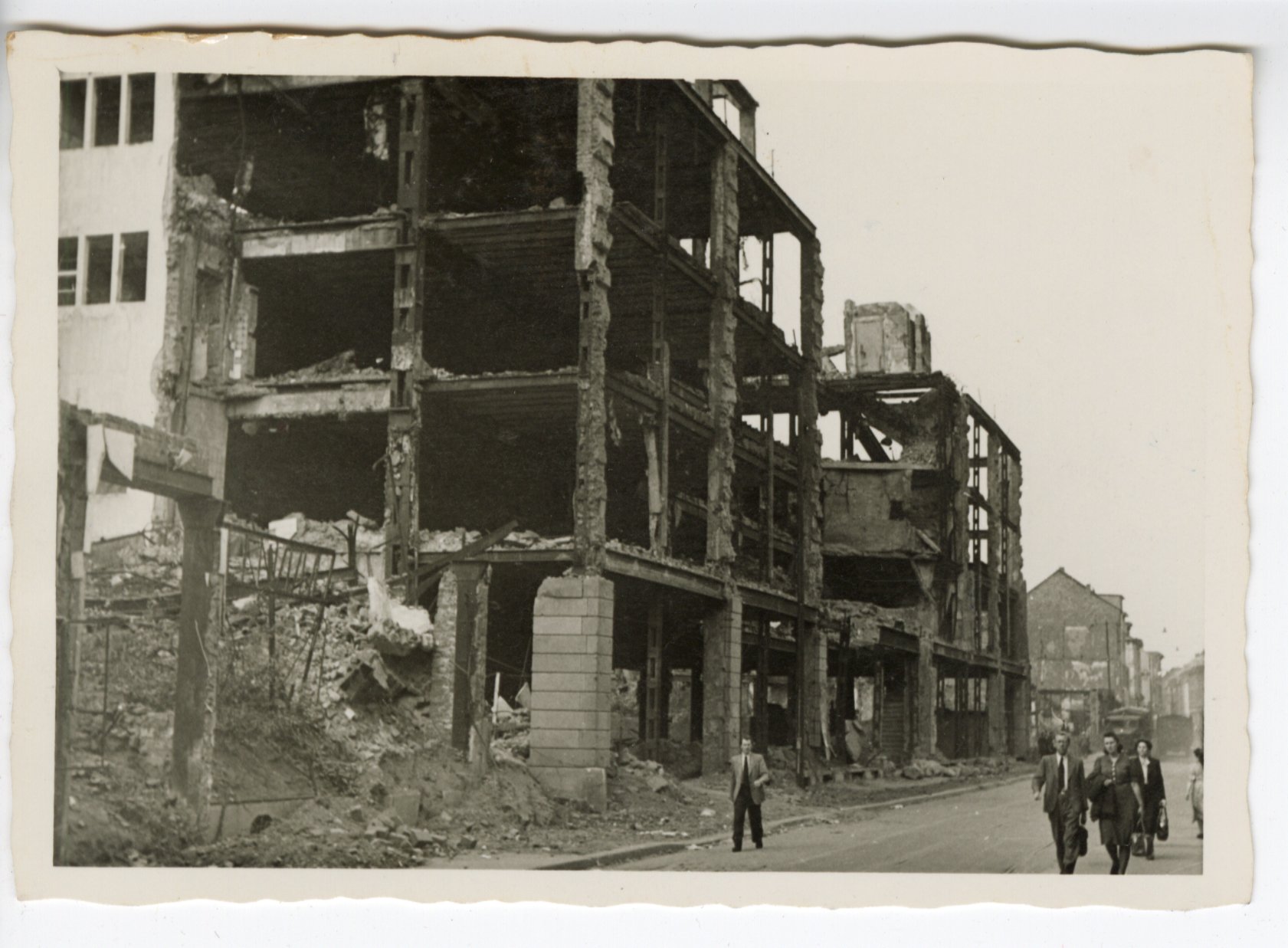
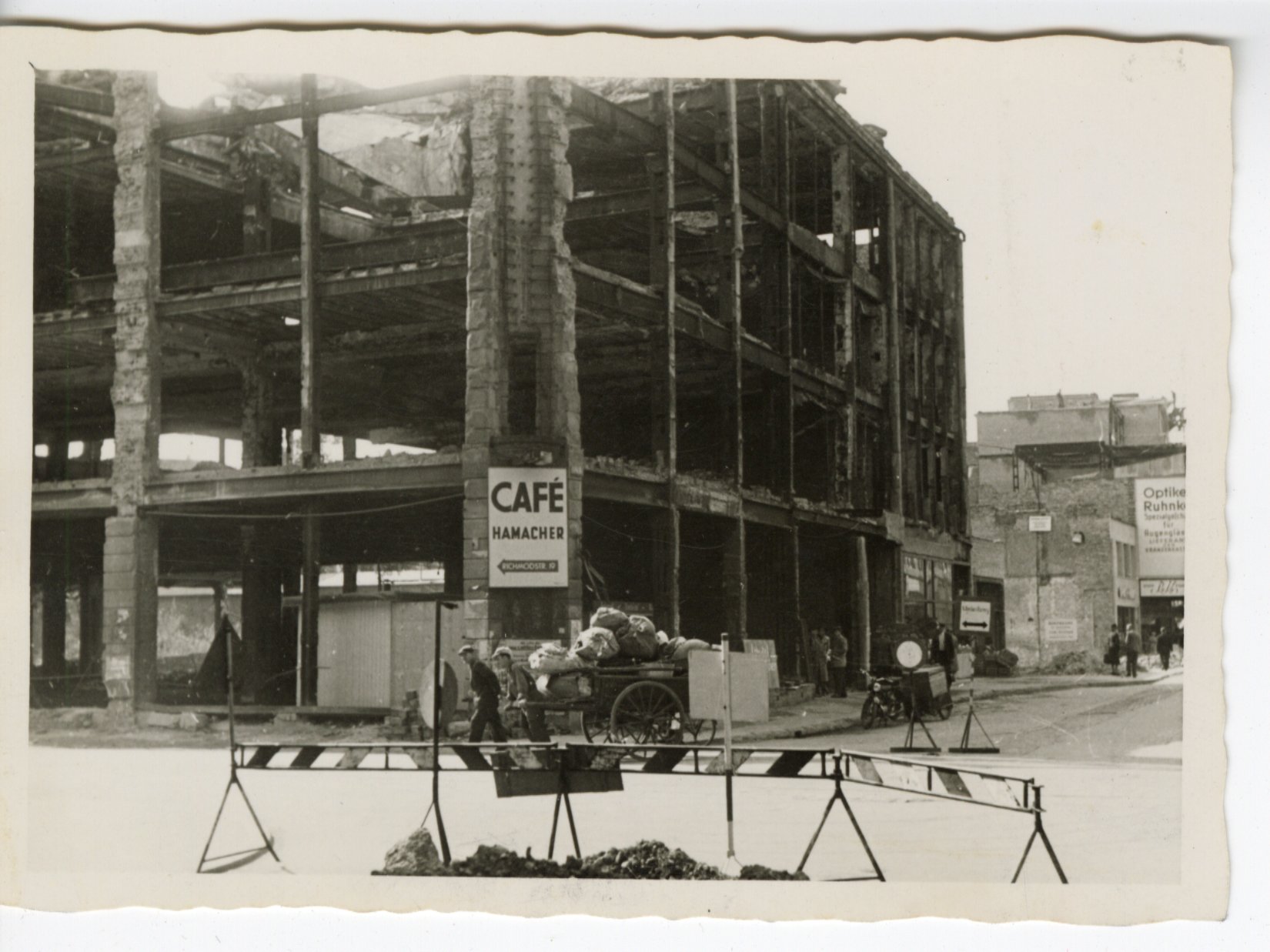
Photographs of the bombed-out Landauer department store in Cologne, Germany, after 1945. JFCS Holocaust Center Archives.
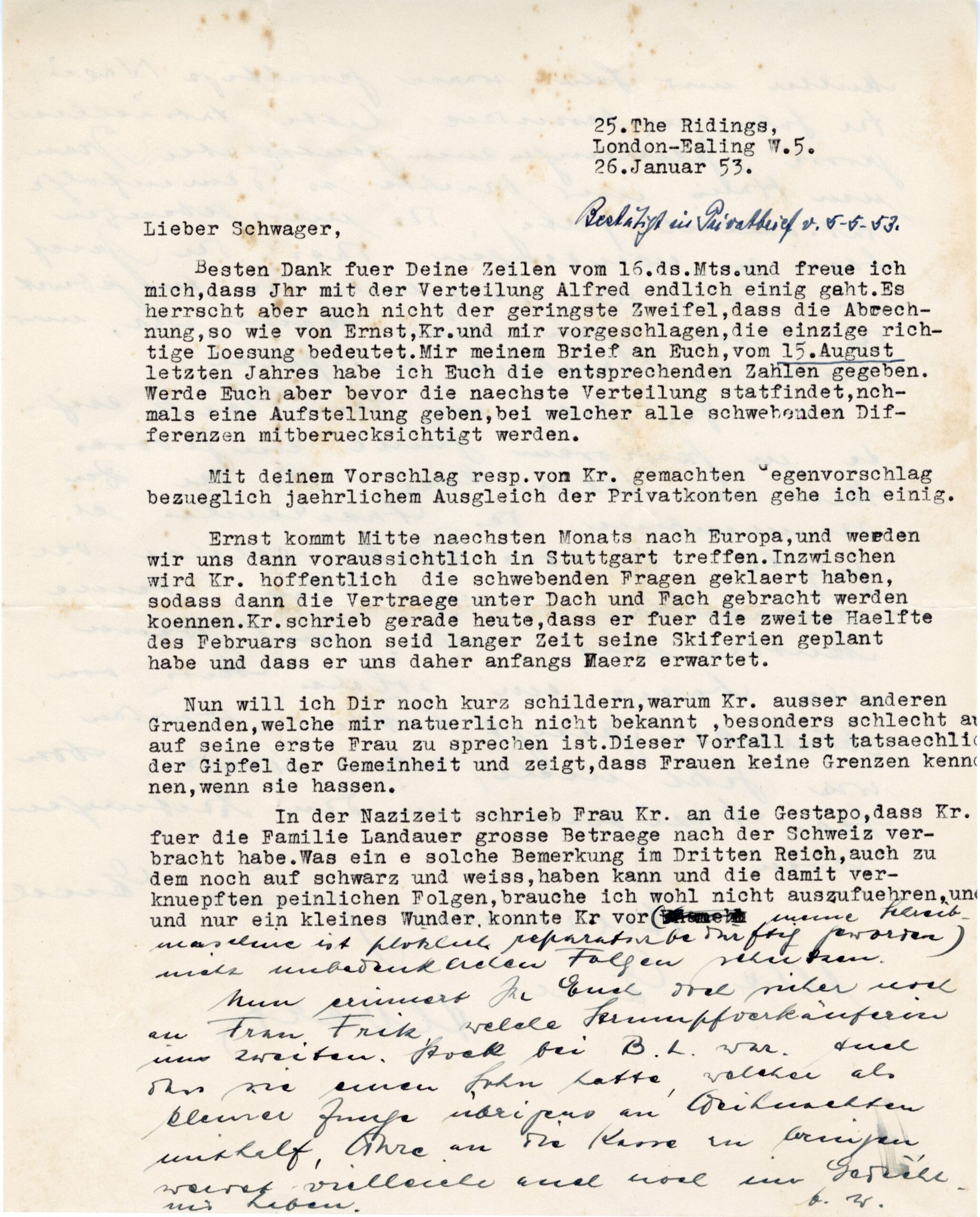
Fortunately, the Landauer-Kays had access to brilliant legal and tax experts who represented them in restitution proceedings. Foremost among them was Albert Kreuzberger, a tax advisor who served as the family’s spokesperson with West German authorities—coordinating financial transactions, managing the estate’s accounts, and clearing rubble from properties to prepare them for renovation and sale.
Kreuzberger had a warm relationship with the Landauer-Kays that dated back to the 1930s. He never joined the Nazi Party and secretly helped transfer part of the family’s fortune to Switzerland. His first wife found out about this and reported him to the Gestapo, but this denunciation was squashed by a Nazi official who was friends with the son of a Landauer store employee.
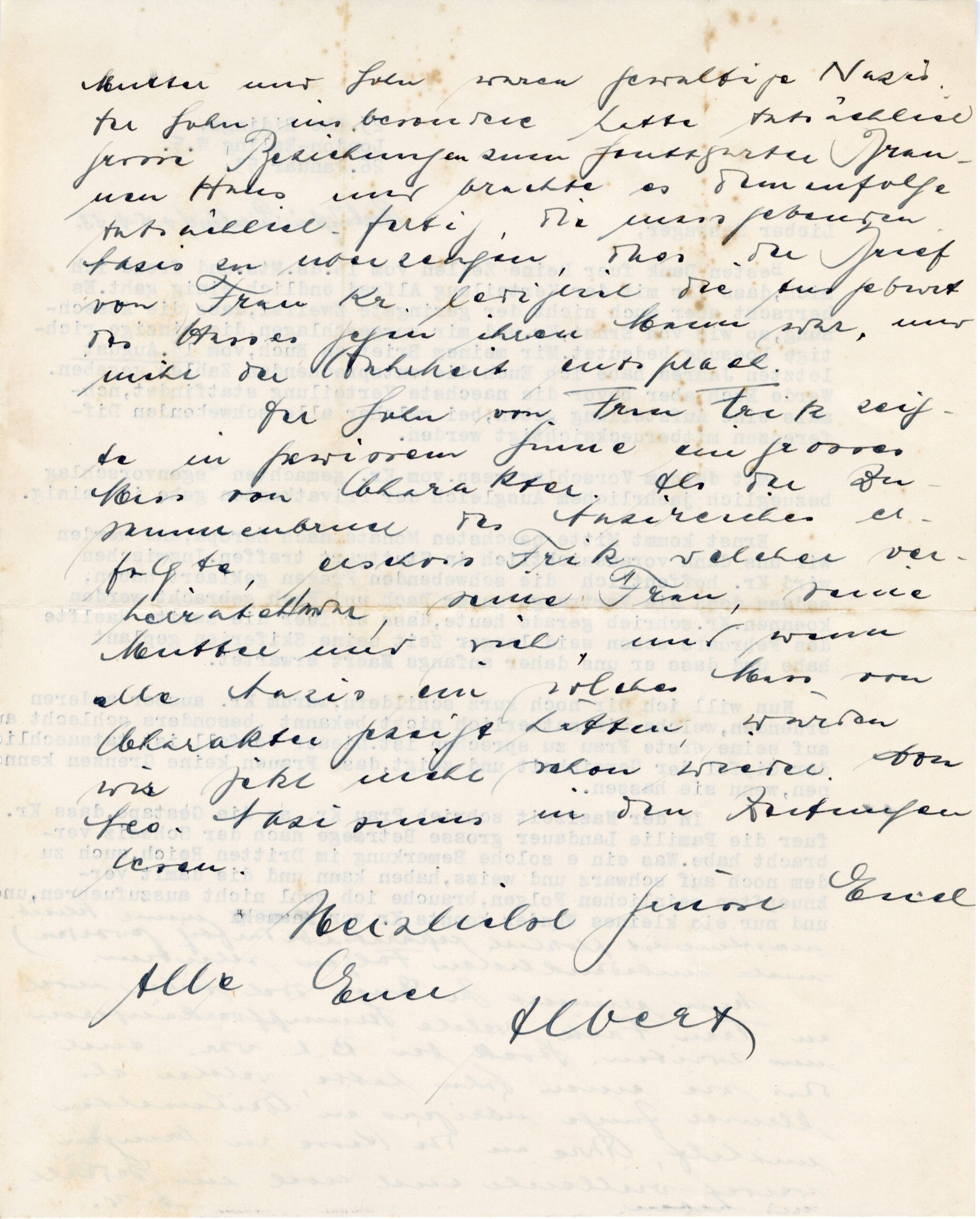
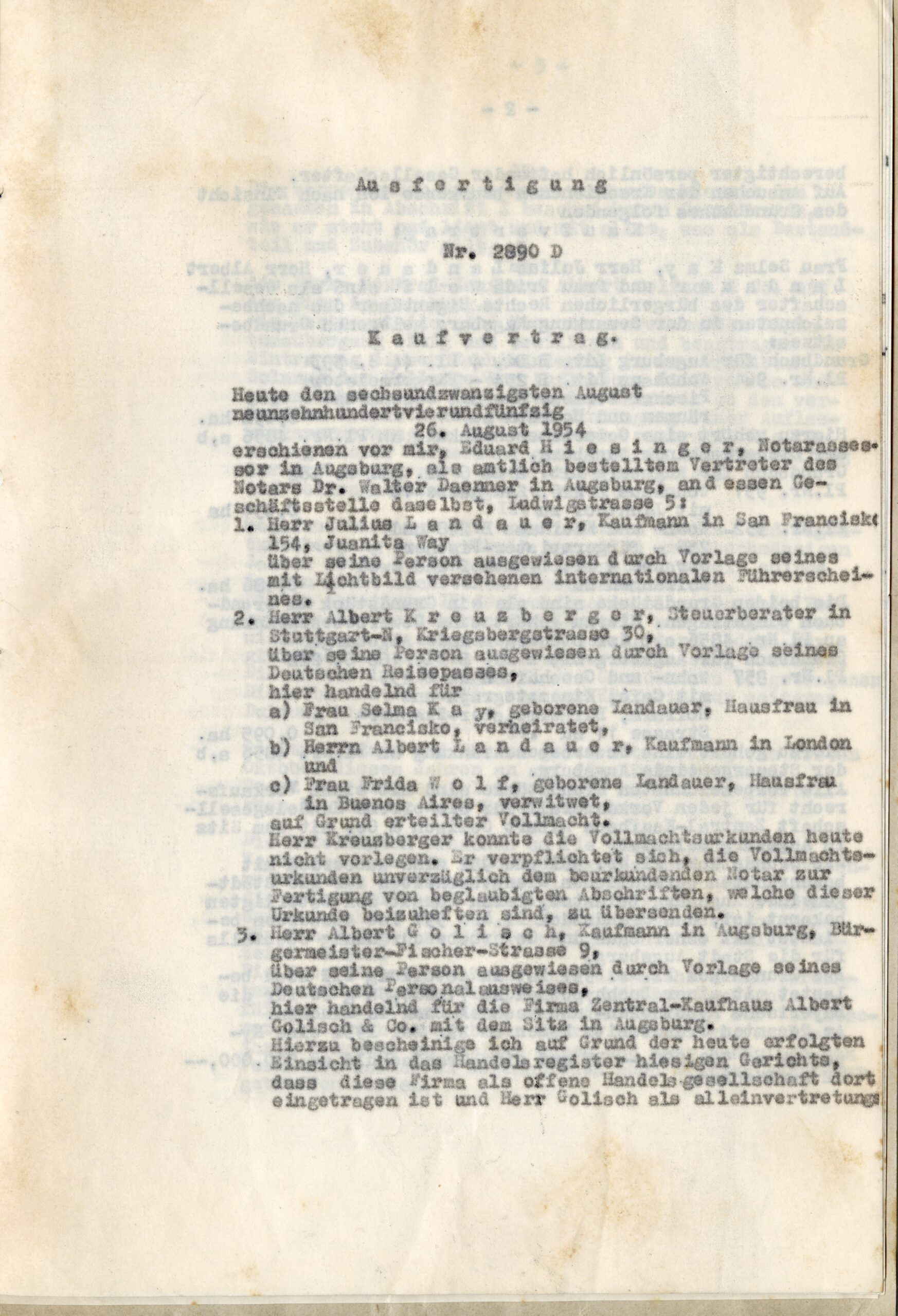
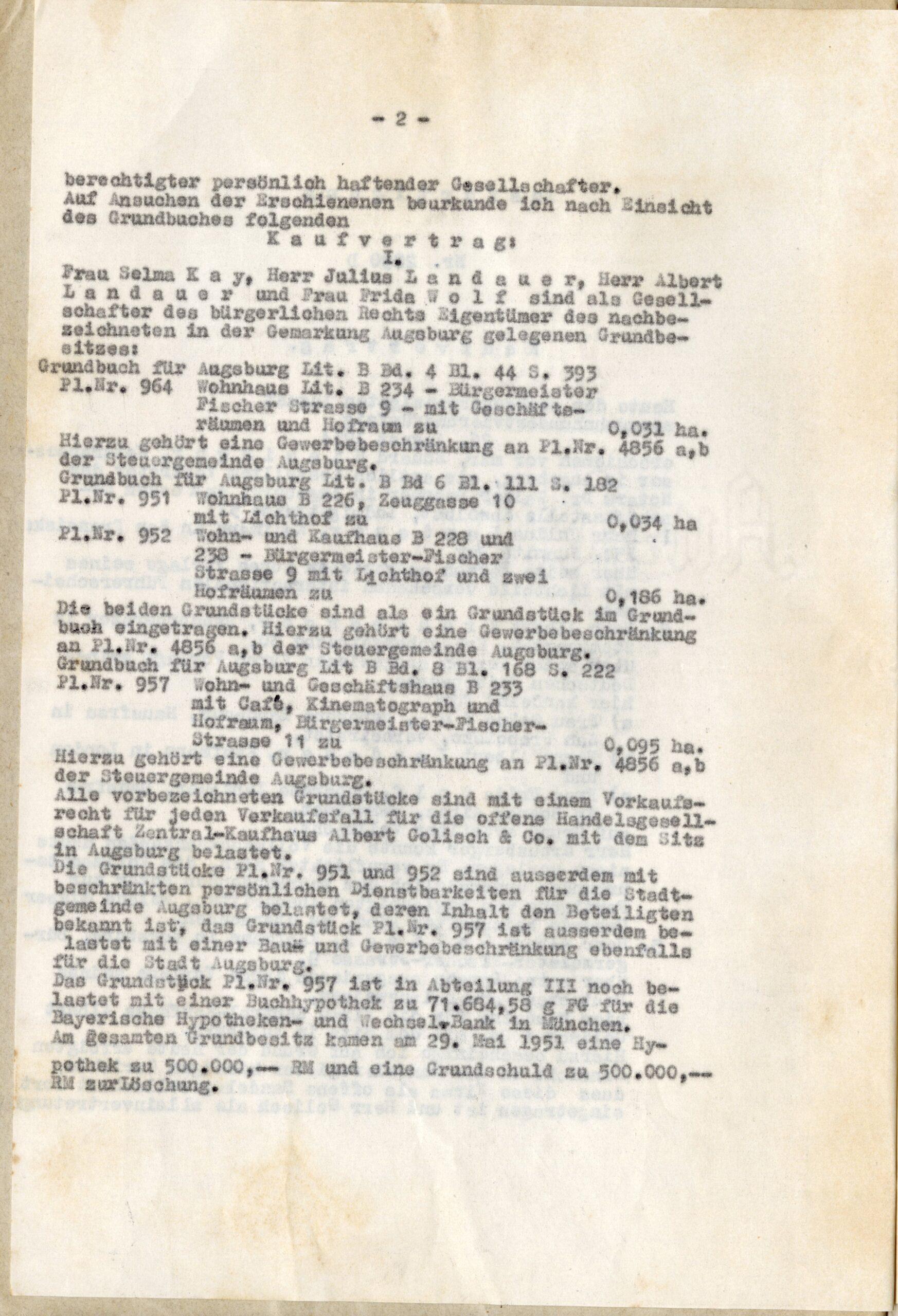
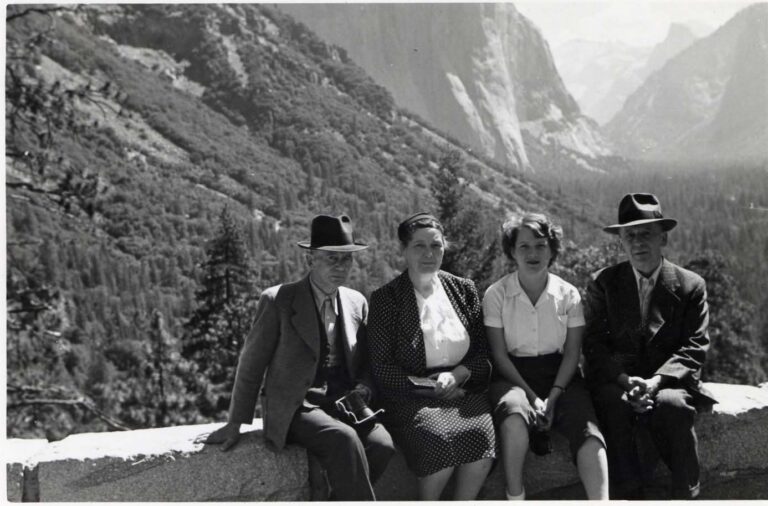
The road to restitution was a long and uncertain one for the Landauer-Kay family, marked by stress and conflict. Although reparations could never replace the totality of what they had lost, the family never gave up in their quest to regain what had been stolen from them. They were meticulous in their efforts, using a variety of legal and financial pathways to ultimately obtain justice for the Nazis’ crimes.
Pictured: Ludwig, Selma, a relative, and Julius Kay sit in front of Yosemite, 1949. JFCS Holocaust Center Archives.
Acknowledgements
This exhibition is comprised of the Kay family collection. A large collection of correspondence and financial papers were donated to the Holocaust Center in 2023. These documents remained in the archives until the 2026 Pell and Manovill University Fellows began conducting research on the collection. They pieced together family letters, financial agreements, and legal contracts, revealing the impressive story of the Landauer-Kaumheimer family’s prosperity, persecution, and perseverance.
Do you have letters, photographs, legal documents, or family heirlooms that could deepen understanding of Jewish life before, during, or after the Holocaust? These materials—however modest they may seem—can become the foundation for future research and education, just as the Kay family’s collection did. To discuss donating items to the archives, please contact Andrew Roth, Manager of Library and Archives, at AndrewRo@jfcs.org